
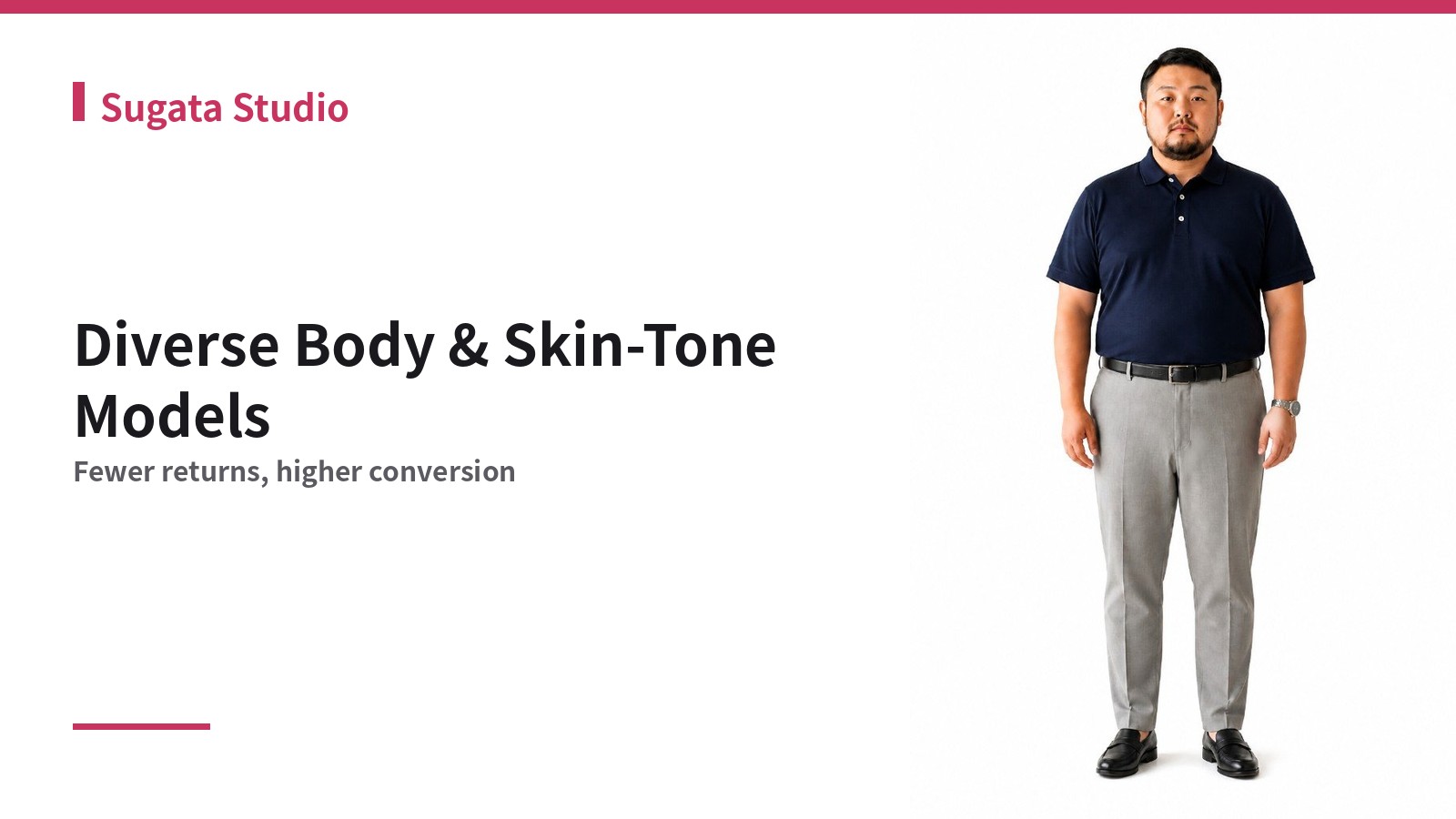
How Diverse Body-Type and Skin-Tone Model Photos Lift Conversion Rate
"I like it, but I don't know if it'll suit my body type" — this is one of the most common reasons for cart abandonment and returns in apparel ecommerce. When a product page shows only one model, and that model skews toward a single body type, age group, or skin tone, shoppers who don't match that profile struggle to picture themselves wearing it.
This article covers why model diversity is directly tied to conversion rate and return rate, and how realistic AI-generated on-model images are as a fix.
"I Don't Know If This Suits Me" Drives Drop-Off
"Fit was different than expected" is consistently one of the top reasons for apparel returns. Without an on-model shot close to their own body type, shoppers have no reference to judge fit against their own frame before buying. The result:
- Shoppers hesitate and abandon the cart
- Items get returned after arrival because "it didn't suit me"
- Shoppers write the product off as "not for someone like me" and leave
This effect is strongest for products with a wide size range — relaxed silhouettes, extended sizing, and similar.
Why Model Diversity Never Scaled
In principle, shooting multiple models across body types and skin tones solves this. In practice, it rarely happened.
- Every additional model adds shoot cost and scheduling time
- Multiply that by your catalog size, and costs scale with both models and SKUs
- Smaller stores in particular can't sustain a roster of multiple models
This cost structure forced most stores to represent every product with a single model.
AI Generates Multiple Models From One Product Photo
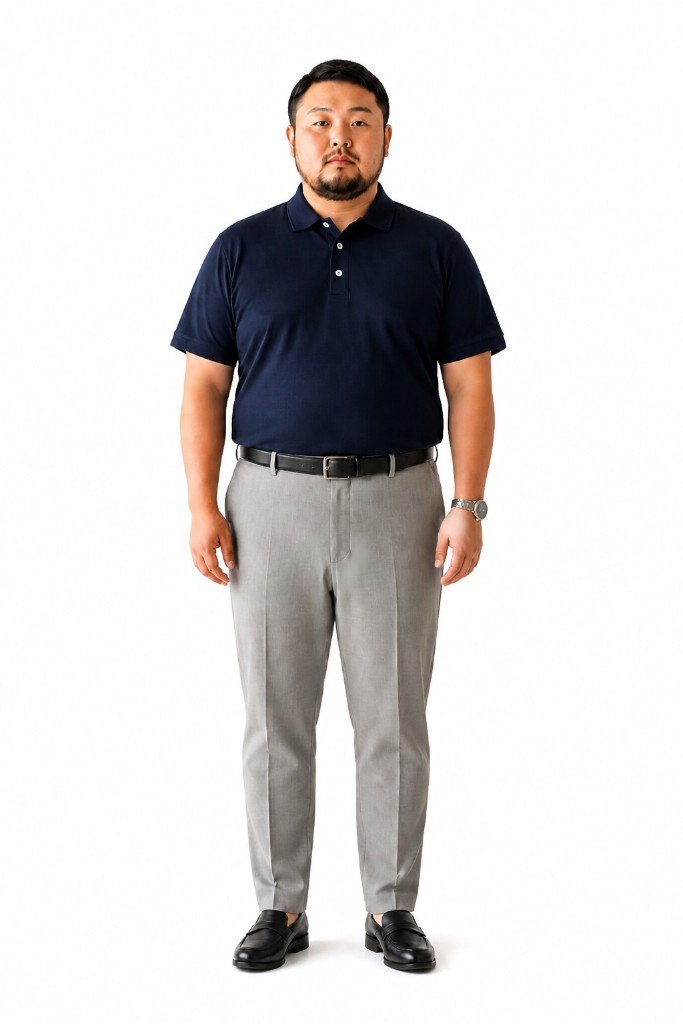
Tools like Sugata Studio generate on-model images across different body types from a single uploaded product photo — no extra model bookings or studio costs, and no per-SKU cost multiplier.
Pairing body-type variation with different skin tones and age ranges lets more shoppers see "someone like me" wearing the product.
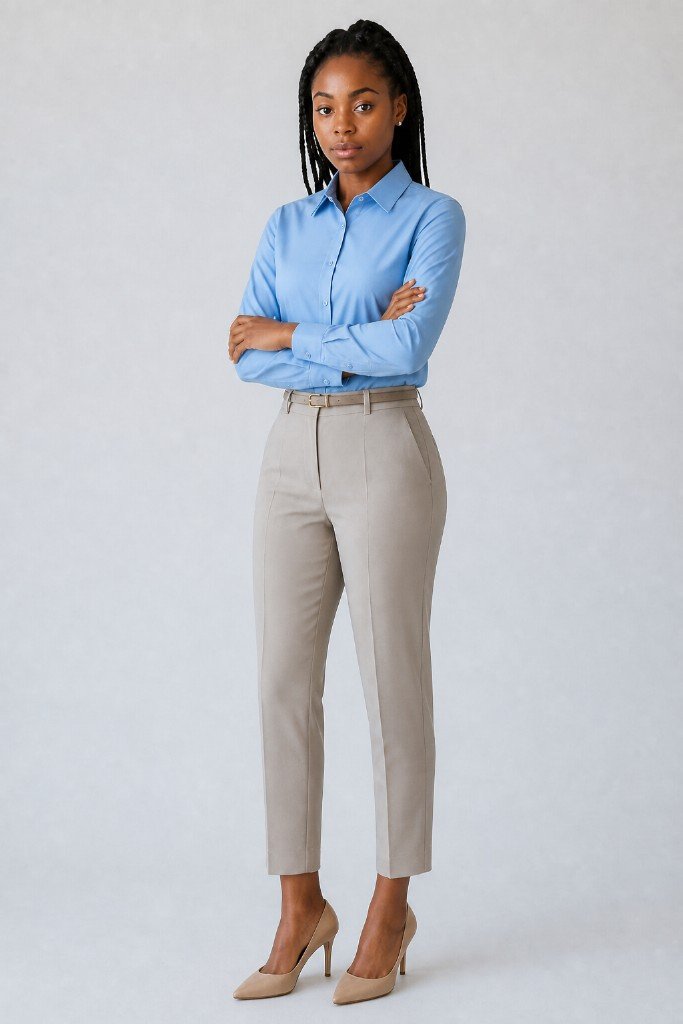
Showing the same garment across a few body types and skin tones gives shoppers more to judge fit against, and lowers the barrier to purchase.
Where to Start
You don't need to diversify every product at once. A practical rollout:
- Start with products that already have high return rates
- Prioritize items with a wide size range (S–3L, etc.)
- Expand coverage as you see the impact
Keep one marketplace-compliant main image (white background, etc.), and add body-type variations as secondary images for the product page, landing pages, or social.
Summary
Model diversity isn't just a nicety — it's an operational lever directly tied to return rate and conversion rate. Cost structure used to make multiple models impractical for most stores; AI-generated on-model images remove that constraint, producing multiple body types and skin tones from one product photo at low cost.
Start with your highest-return products or widest size ranges and test a body-diverse set of on-model images.
Sugata Studio lets you try this for free — just upload a product photo.